
Summertime Tree Care
With summer right around the corner, young will trees need your extra support to stay healthy. Healthy trees are better able to withstand drought, fight off pests, and flourish. After proper planting, watering is the most essential activity for establishing trees. Scroll down for our resources on watering, from the simple to the complex. And, at the bottom of the news, you’ll find some fun conversation starters on pollinators. For the bulk of this issue, we take a deep dive into the lifecycle, impact, and recommended control measures for the Japanese beetle, one of the most visibly damaging pests in our area.
Tree Care Guide
As always, here is our 4-season printable tree care guide to pin to your fridge or corkboard. For easy online reference, bookmark our Tree Care Page.
Japanese Beetles – What Works & What Doesn’t…
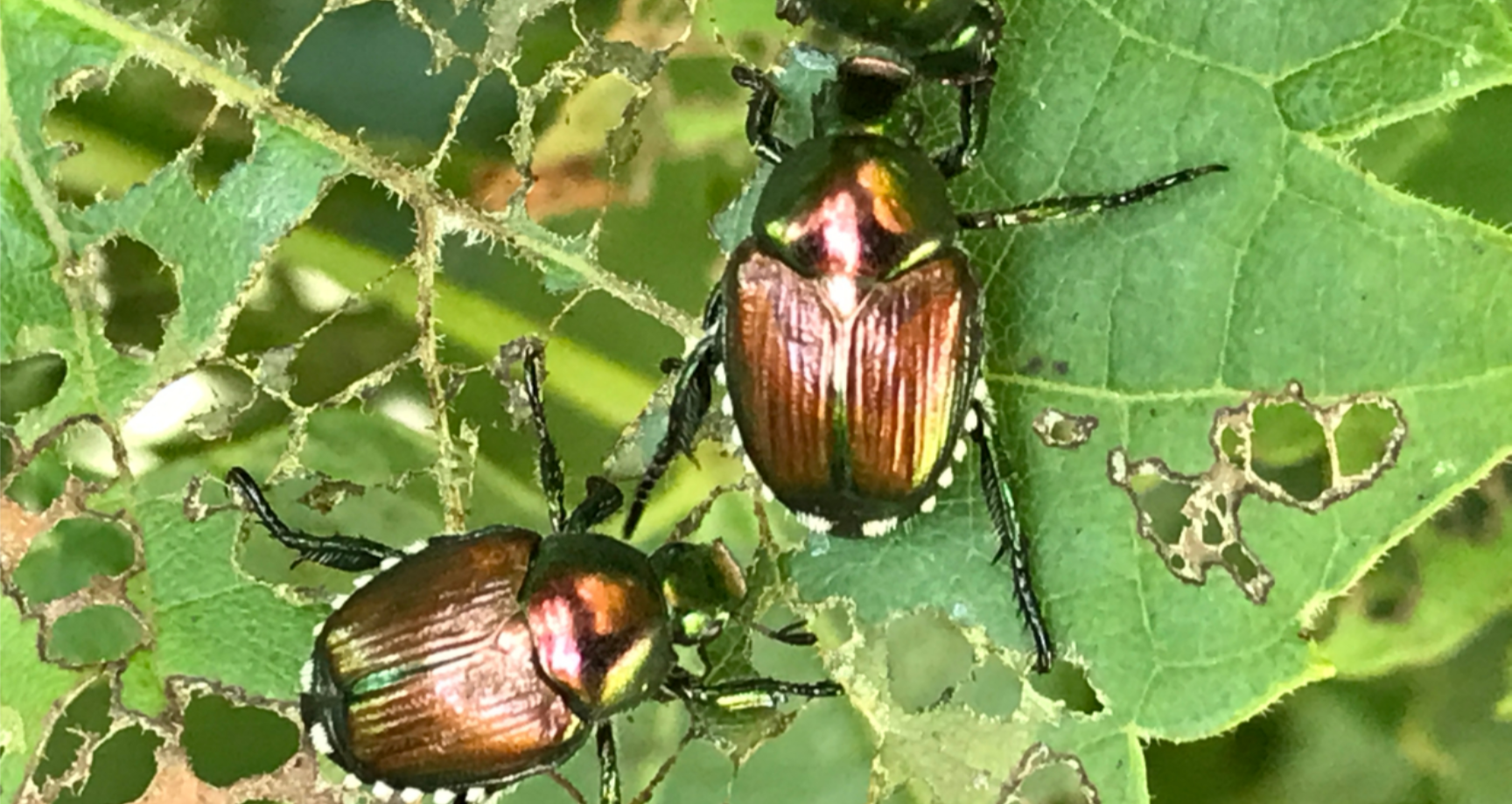
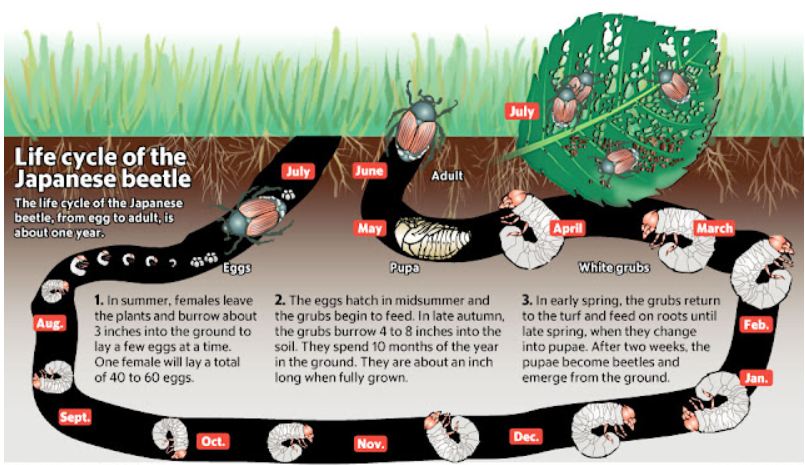
Japanese Beetles (JB) are a scourge on the landscape in the summer months, and they are not picky eaters, browsing on a wide range of leaves. They appear in late June and persist through September. Rapid reproduction makes them difficult to control. Eggs are laid below ground, and grubs feed on turf grass (lawn) roots before emerging as adults. Fruit Trees, Maples, Lindens, Roses, Grape & Virginia Creeper vines are among the first plants to be targeted by JB, but the pests are generalists and will eventually attack a wide range of plants.
What Works?
Many Bio-control products are now widely available which are completely non-toxic to humans, pets, wildlife and pollinators. Always read and follow directions carefully.
- Treat turf areas for grubs in Spring: certain soil drenches have been proven very effective at reducing grub populations when used correctly.
- Spray affected plants: Spray leaves when beetles are present – we recommend using a non-toxic option, but if using a chemical insecticide, never spray when bees or other pollinators are active during the day, or if it is windy/ rainy.
- Plant Geraniums: Yes, really! Geraniums contain a compound which, when ingested, will paralyze JBs, leaving them vulnerable to predators and desiccation in the sun. Read More Here.
- Manual Control: Mix dish soap and water and simply knock the beetles into the solution- this method works best in the morning while beetles are slower and less alert.
What doesn’t…
- Beetle Traps: In most urban scenarios you will end up attracting more beetles by hanging up hormone-laced traps.
- Milky Spore: Extended studies show that milky spore must be applied over multiple years to show any effectiveness, and even then it only reduced JB populations by about 5%.
- Insecticides not labeled for Japanese Beetle control: always use products to target a specific pest; broad spectrum treatments can kill off beneficial bugs, creating more problems than they solve.
Want more Info? Follow these links for a wealth of knowledge from the Colorado State University Extension & the USDA: CSU Japanese Beetle Fact Sheet and Managing the Japanese Beetle: A Homeowners Handbook
Japanese Beetle Lifecycle Graphic courtesy of USDA
Knowing When & How Much to Water
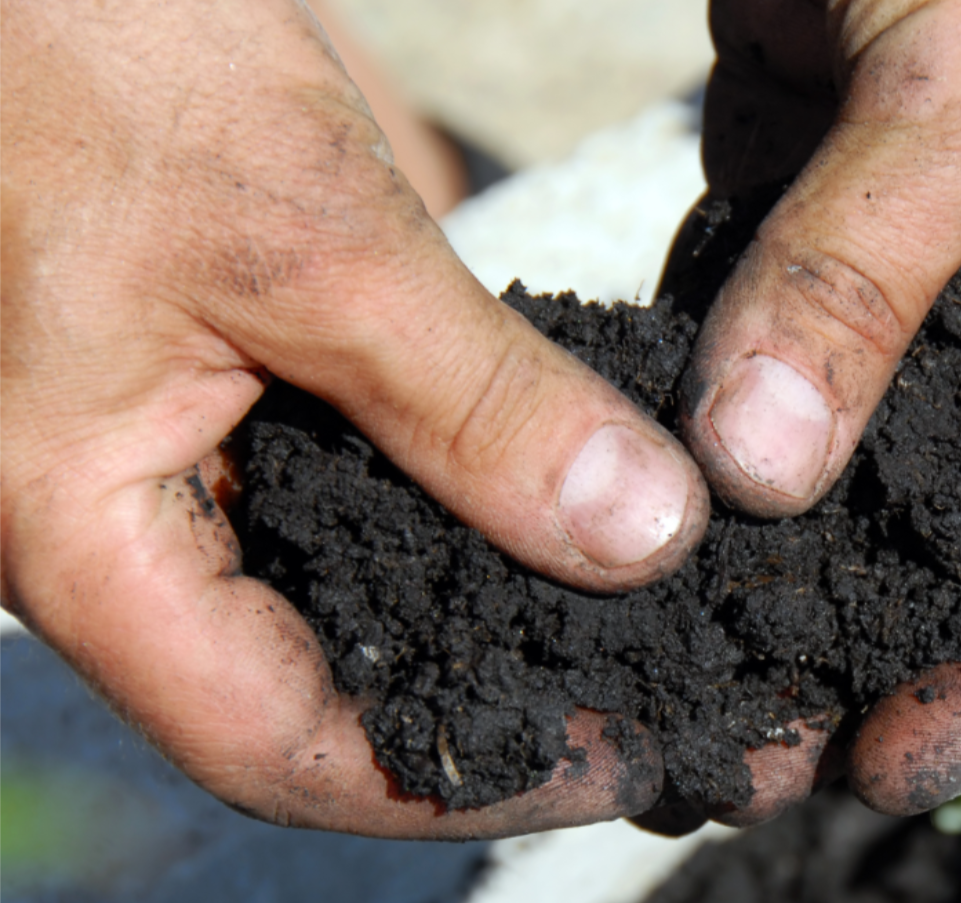
The best way to tell if your tree needs water is to feel the soil. Generally, we recommend watering once a week June – August. Dig down 3-8 inches just outside of the root zone. Pinch the soil between your fingers, if it crumbles, its time to water. If it sticks together, wait and check again in a few days.
Calculate your water needs: How Much Water Does Your Tree Need?
Denver Water prohibits irrigation between 10am – 6pm- so water in the morning or evening.
Read more from our friends at the Arbor Day Foundation: How to Properly Water Your Trees
Trees for Bees? Yes Please!
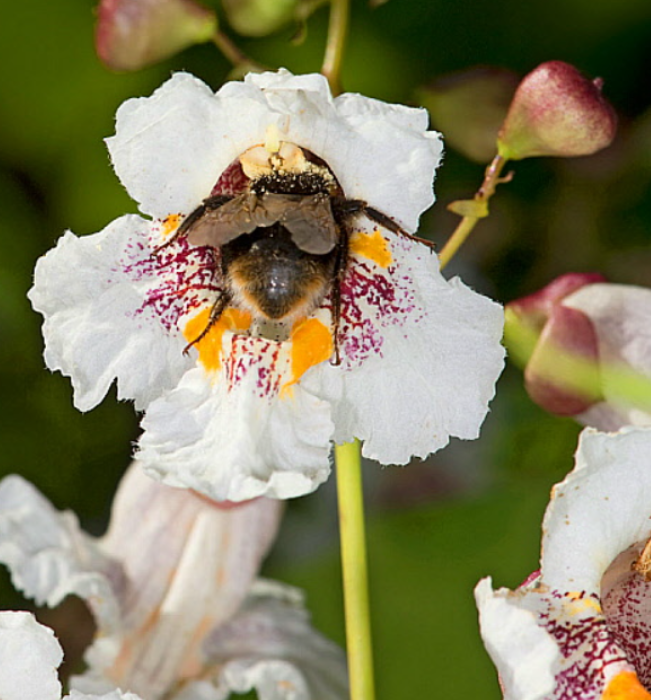
Trees are important sources of food and habitat.
Even trees that don’t have showy flowers can help support native & honey bee populations as well as butterflies, moths and hummingbirds!
Some of the best trees for pollinators are Catalpa, Maple, Crabapple, Linden, Magnolia, Apple, Pear, Cherry, Redbud, Hawthorn, and Horse Chestnut.
Check out these resources for pollinator friendly plants and learn why pollinators are so important to humans and the environment.
Categories

Archives
Support us with a Donation
Related Posts

Arborist’s Corner: The Ginkgo

Farewell Loriee, Welcome Allie

Arborist’s Corner: Show Us Your Root Flare
Featured Press