
Arborist’s Corner: The Ginkgo

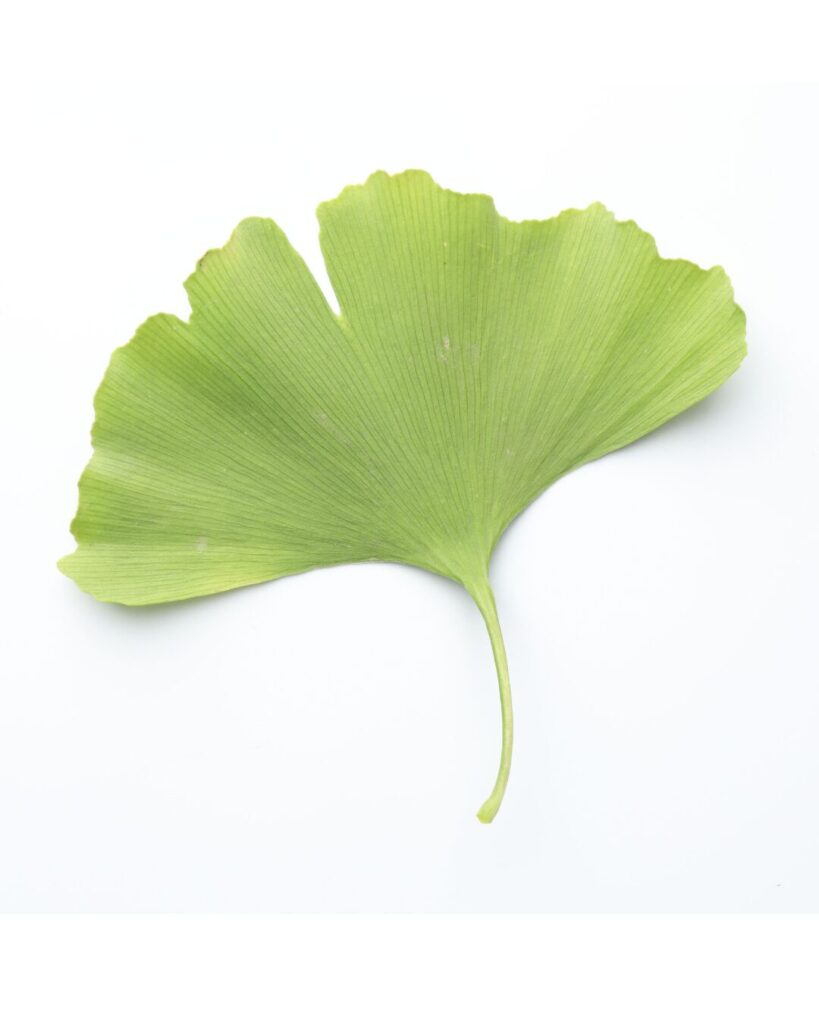
One of the most fascinating yet under-recognized trees in Denver’s landscape is the ginkgo tree (Ginkgo biloba). This species is native to China but has been cultivated and planted worldwide. Its two-lobed, fan-shaped leaves are unlike any other tree we plant in our urban areas, lending the tree not only a unique look but an ancient one. Which makes sense, since the ginkgo’s genes are so old that the tree is commonly described as a “living fossil”.
An Ancient Tree
Pollen grains and other fossils of ginkgo relatives date as far back as 150 million years ago, meaning that they existed during the time of the dinosaurs. Back then, multiple species of ginkgo trees existed and were a food source for ancient animals; however, over time, these other species died out, leaving the Ginkgo biloba as the sole survivor of the Ginkgoaceae family.
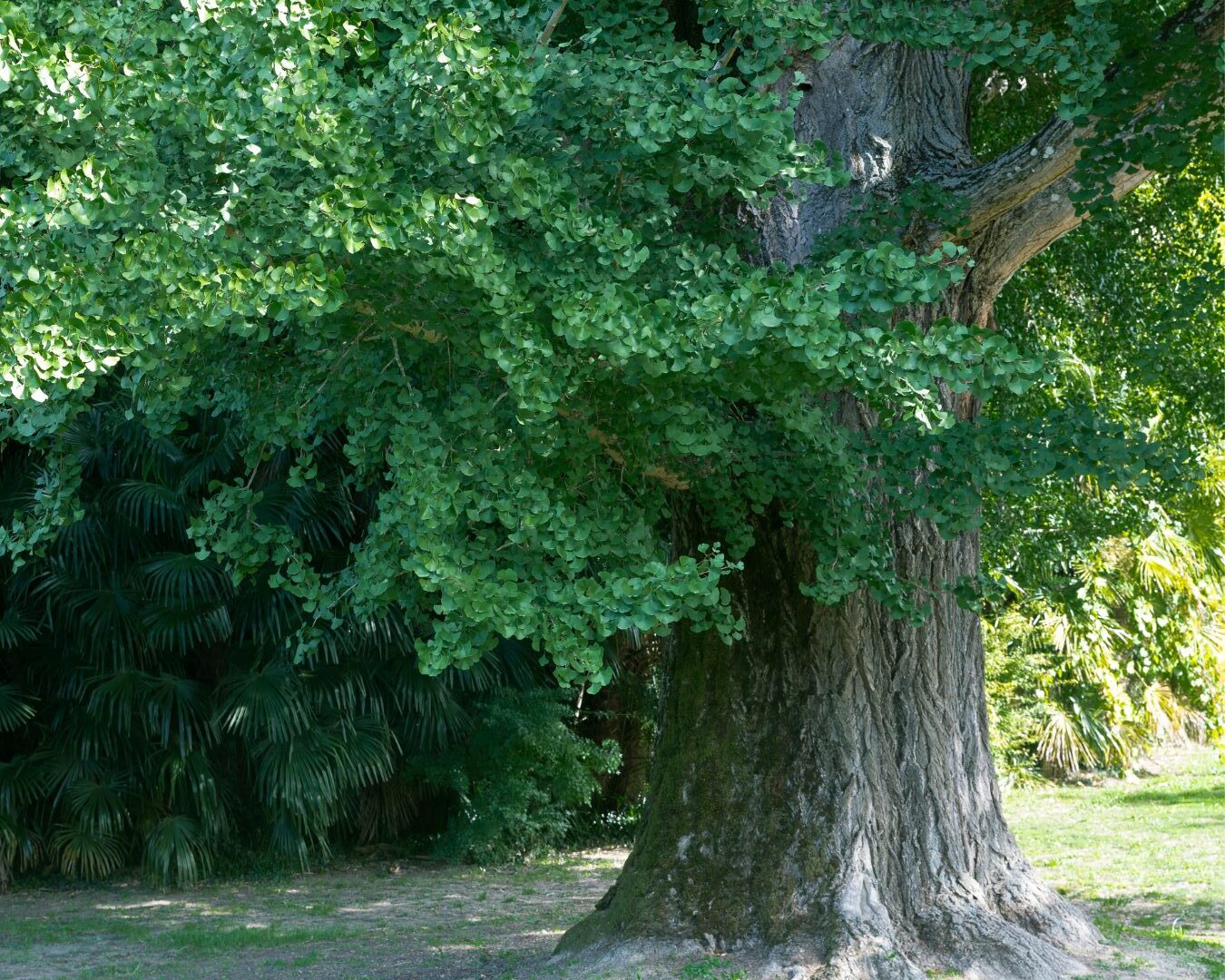
The long-lasting genes of this particular species indicate incredible resilience and adaptability. Over millions of years, the DNA found in this tree family has outlasted adverse climate conditions, including ice ages; it has outlived pests and pathogens; and it has not only survived natural disasters, but also human-made ones. In fact, six ginkgo trees survived the atomic bomb that was dropped on Hiroshima in the 1940s. Its survivability and adaptability to a wide variety of growing conditions and environments makes it extremely desirable as an urban tree, capable of tolerating acidic or alkaline soil, dry conditions, pollution, and even salts. The ginkgo is irrepressible.
Symbolism
The Ginkgo biloba is what we call dioecious, meaning it has male and female trees. Typically, male trees are planted in the built environment as the fruit from the female trees, though eaten as a delicacy in some parts of the world, are often described as foul-smelling, being compared to rancid butter.
The two different sexes, along with the two lobes of the leaves, have made the ginkgo a symbol of duality. The leaves have also made the ginkgo a symbol of love, even inspiring romantic poetry. Just as it is difficult to distinguish the two lobes as separate leaves, so is it with lovers and their inability to separate themselves from each other.
Growth

Ginkgo trees slowly grow to 80’ high, though in Colorado, a ginkgo usually grows to about 65’ tall. It has a pyramidal shape, and its bark is grayish brown, becoming roughly furrowed with age. During the growing season, the leaves are bright green, and in the fall, they turn a brilliant yellow before dropping almost all at once, leaving a beautiful golden carpet. Since the ginkgo is resistant to most pests and diseases, it is an excellent specimen for the landscape.
The Park People is thrilled to periodically offer ginkgo trees as part of our Denver Digs Trees program.
To learn more about the ginkgo, please visit the links below:
Ginkgo Biloba from Missouri Botanical Garden
Categories

Archives
Support us with a Donation
Related Posts

Arborist’s Corner: The Ginkgo

Farewell Loriee, Welcome Allie

Arborist’s Corner: Show Us Your Root Flare
Featured Press